

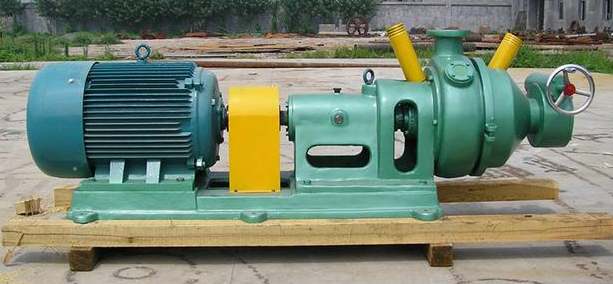
 Both the 380 and 450 double disc refiners are mainstream medium-to-large refining equipment in the papermaking industry. The core difference lies in the differentiation of production capacity, power, and application scenarios brought by the nominal disc diameter (380mm vs 450mm). Both adopt a “rotating disc + fixed disc” counter-rotating grinding structure, balancing fiber cutting and fibrillation effects, but have their own focuses in terms of processing scale, energy consumption configuration, and suitable paper grades. The following is a detailed comparison from core dimensions to provide reference for production line selection.
I. Comparison of Core Specifications and Parameters
| Comparison Dimension | 380 Double Disc Refiner | 450 Double Disc Refiner | Key Difference Description |
|---|---|---|---|
| Nominal Disc Diameter | 380mm | 450mm | The contact area of the 450-type disc is about 40% higher than that of the 380-type, which is the core source of production capacity difference |
| Equipment Overall Dimension (L×W×H) | Approximately 1800×1200×1500mm | Approximately 2200×1500×1800mm | The 450-type has a larger volume and requires matching larger installation space and load-bearing foundation |
| Equipment Weight | Approximately 1200-1500kg | Approximately 2000-2500kg | Due to the enlarged disc and body structure, the weight of the 450-type is increased by more than 60% |
| Suitable Refining Concentration | Low consistency (3%-8%), medium consistency (8%-15%) | Low consistency (3%-8%), medium consistency (8%-15%), high consistency (15%-25%) (optional) | The 450-type supports high-consistency refining option, adapting to higher-intensity fiber modification needs |
| Production Capacity | 15-30t/d (single unit) | 30-60t/d (single unit) | The production capacity of the 450-type is doubled, suitable for large-scale production lines |
| Motor Power | 110-160kW | 200-315kW | Power matches production capacity, and the unit energy consumption of the 450-type is slightly lower than that of the 380-type (scale effect) |
| Rated Rotational Speed | 1500-3000r/min | 1500-2800r/min | The 380-type has a wider speed adjustment range, suitable for refined refining; the 450-type focuses on stable output |
| Disc Linear Speed | 23.8-47.7m/s | 29.5-45.8m/s | The 380-type has stronger shearing force at high speed, and the 450-type runs more stably at medium and low speeds |
| Disc Material Options | High-chromium alloy, stainless steel | High-chromium alloy, stainless steel, ceramics (optional) | The 450-type provides more wear-resistant ceramic disc options, suitable for long-term processing of high-impurity raw materials |
| Control System | PLC automatic control (basic version) | PLC automatic control (high-end version, supporting AI parameter optimization) | The 450-type can be connected to the intelligent production line system to realize adaptive adjustment of the refining process |
II. Comparison of Core Technical Advantages and Application Scenarios
1. 380 Double Disc Refiner: The “Precise and Efficient Choice” for Medium-Scale Production
- Technical Advantages: Compact structure and flexible operation, with disc gap adjustment accuracy up to 0.1mm, suitable for scenarios requiring fine fiber morphology; strong adaptability to low-consistency and medium-consistency processes, unit energy consumption controlled at 80-120kWh/t pulp, with outstanding cost performance in small and medium-batch production; low equipment investment and installation cost, and low maintenance difficulty.
- Application Scenarios: Medium-to-large production lines with a daily output of 100-500t (single unit or 2-3 units in parallel); priority adaptation to cultural paper (writing paper, printing paper), toilet paper and other paper grades with high uniformity requirements; suitable for processing low and medium impurity raw materials such as wood pulp and waste paper pulp, and can also be used as supporting refining equipment.
2. 450 Double Disc Refiner: The “Core Capacity Equipment” for Large-Scale Production
- Technical Advantages: High refining efficiency, single-unit production capacity up to 30-60t/d, which can reduce the number of equipment configurations and the floor area of the production line; high-consistency refining option and upgraded wear-resistant materials, suitable for high-intensity and long-term continuous operation; under large-scale production, the unit energy consumption is as low as 70-100kWh/t pulp, and the long-term operation cost is more optimal; the high-end control system supports multi-equipment linkage, adapting to the construction of intelligent factories.
- Application Scenarios: Large/extra-large production lines with a daily output of more than 500t (single unit or multiple units in series); priority adaptation to packaging paper (corrugated base paper, linerboard) and other paper grades with high capacity requirements; suitable for large-scale processing of high-impurity waste paper pulp and coarse fiber straw pulp, and can also be used as the main refining equipment to support the operation of the entire production line.
III. Key Factors for Selection Decision
- Production Line Scale: Choose 380-type for daily output ≤500t (flexible configuration, more economical investment); choose 450-type for daily output ≥500t (scale-based cost reduction, higher efficiency).
- Paper Grade and Raw Material Characteristics: Choose 380-type for producing fine cultural paper and toilet paper (precise fiber control); choose 450-type for producing high-strength packaging paper and processing high-impurity raw materials (wear resistance + high-consistency adaptation).
- Energy Consumption and Cost Budget: Prioritize 380-type for short-term investment; choose 450-type for long-term large-scale production (lower unit energy consumption and maintenance cost).
- Intelligence Demand: Choose 450-type if it needs to be connected to the intelligent central control system and realize adaptive adjustment; 380-type can meet basic automation needs.
Both are mature and reliable refining equipment, and the core difference lies in “scale adaptability”: the 380-type is superior in flexibility and precision, suitable for the refined needs of medium-scale production lines; the 450-type is strong in capacity and efficiency, and is the core choice for cost reduction and efficiency improvement of large-scale production lines. During selection, comprehensive judgment should be made based on its own capacity planning, paper grade positioning and long-term operation c
Post time: Dec-16-2025