

In the development process of the papermaking industry, sheet forming quality is the core factor that determines paper quality, production efficiency and product added value. Traditional fourdrinier paper machines adopt single-side dewatering and forming through the bottom wire, which has long been plagued by industrial problems such as severe two-sidedness, poor sheet formation and limited production speed. As a core upgraded device for fourdrinier paper machines, the top wire former relies on the technical advantages of double-sided dewatering and bidirectional forming. It has become a key configuration for modern medium and high-speed papermaking production lines to optimize paper quality, increase production capacity and reduce energy consumption, and is widely applied in the production of mainstream paper grades including cultural paper, packaging paper and specialty paper.
## 1. Basic Definition and Equipment Composition of Top Wire
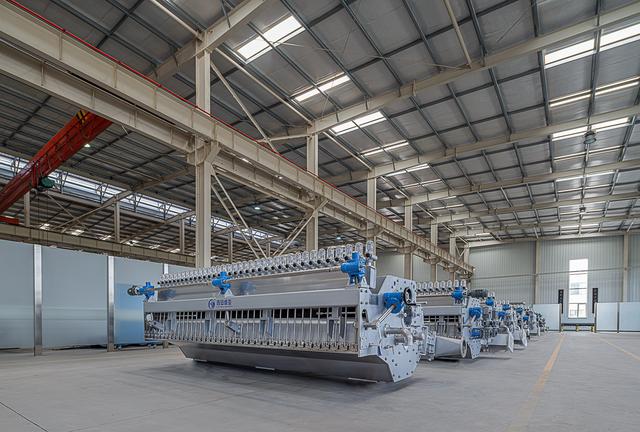
The top wire, also known as the upper forming wire, and its supporting equipment are collectively called the top wire former. It is an annular polyester forming wire system installed above the wire section of traditional fourdrinier paper machines, forming a double-layer wire structure with the bottom wire of the equipment. The complete equipment is mainly composed of guide rolls, forming rolls, tension rolls, correction rolls, return rolls and supporting cleaning and spraying devices. Featuring compact structure and strong adaptability, it can be perfectly matched and renovated with existing fourdrinier paper machines.
During production and operation, the top wire requires no independent motor drive and operates synchronously by friction with the bottom wire and wet paper web, ensuring stable operation and extremely low energy consumption. The pulp first undergoes preliminary pre-dewatering on the bottom wire to form an initial wet paper web, which then enters the wedge-shaped clamping area formed by the top wire and bottom wire. Clamped stably by the double-layer wire mesh, the paper web completes subsequent dewatering and fine forming, thoroughly changing the traditional single-side forming production mode.
## 2. Core Working Principle of Top Wire Forming
The core advantages of top wire forming lie in **bidirectional symmetrical dewatering and flexible uniform forming**. Traditional fourdrinier paper machines only filter water downward through the bottom wire. Fine fibers and fillers in the pulp settle downward with the water flow, resulting in a dense bottom surface and loose top surface of the paper web and obvious structural differences between the two sides.
After the top wire is put into operation, a bidirectional upper and lower dewatering channel is formed when the wet paper web enters the double-layer wire clamping area: water can be discharged downward through the bottom wire and upward through the top wire. Under the mild extrusion and water flow disturbance of the double-layer wire, fiber flocs inside the paper web are gently dispersed, and disorderly arranged fibers are redistributed uniformly, greatly improving the distribution symmetry of fillers and fine fibers. Meanwhile, the progressive pressure control of the clamping area avoids web crushing and paper breakage caused by excessive rapid compression of the wet paper, realizing high-quality and stable paper forming.
## 3. Core Advantages of Top Wire in Papermaking Production
### 3.1 Eliminating Paper Two-sidedness and Improving Paper Quality
Two-sidedness is a major quality defect of traditional fourdrinier papermaking, manifested in great differences in smoothness, porosity, printability and color consistency between the front and back sides of paper, which seriously affects the use effect of high-grade paper grades. Through double-sided symmetrical dewatering, the top wire balances the fiber compactness and pore structure on both sides of the paper web and greatly reduces the performance difference between the two sides. The optimized paper has a delicate and uniform surface with significantly improved coating adhesion and printing overprint accuracy, making it an essential process configuration for the production of high-grade cultural papers such as offset paper, coated base paper, copy paper and security paper.
### 3.2 Optimizing Sheet Formation and Eliminating Surface Defects
Fiber flocculation is prone to occur during pulp forming, forming paper flocs, cloud marks, pinholes and other appearance defects that reduce paper grade. The mild shear force generated during the operation of the top wire clamping area can effectively disperse pulp flocs, make fibers and fillers distributed more uniformly, greatly improve the overall sheet formation, reduce paper surface defects, and significantly enhance paper appearance quality and finished product qualification rate.
### 3.3 Enhancing Dewatering Capacity and Increasing Production Capacity
The top wire can bear 30%~40% of the total dewatering capacity of the wire section, effectively sharing the working load of the bottom wire vacuum box and greatly improving the overall dewatering efficiency of the wire section. Under the same production conditions, the dryness of wet paper exiting the wire is significantly increased for paper machines equipped with top wires, completely breaking the bottleneck of insufficient dewatering capacity and limited high-speed operation of traditional fourdrinier paper machines. The paper machine speed can be increased by 20%~50%, greatly improving the production capacity of the production line. In addition, efficient pre-dewatering shortens the wire table length and saves investment costs for plant construction and equipment.
### 3.4 Reducing Production Energy Consumption and Prolonging Service Life of Equipment
The bidirectional dewatering mode of the top wire reduces the working time and load of high vacuum suction of the bottom wire, effectively lowering the power consumption of vacuum pumps and saving production energy. Meanwhile, the bottom wire no longer bears all pulp impact and negative pressure friction alone, resulting in reduced wear rate, significantly prolonged service life, and fewer wire replacement times and equipment operation and maintenance costs. In addition, the optimized white water circulation system improves pulp reuse rate, reduces production sewage load, and achieves energy saving, consumption reduction and green production.
## 4. Main Types and Application Scenarios of Top Wires
According to paper basis weight, process requirements and production speed, top wires are mainly divided into three categories adapted to different production scenarios:
### 4.1 Roll-type Top Wire
As the mainstream model in the market, it forms an arc pressurized clamping area through forming rolls to realize progressive dewatering. With stable pressure, convenient adjustment and high operation tolerance, it is suitable for medium and high-speed production lines with a speed of 250–1000m/min, and is widely used in the production of most industrial papers such as offset paper, carton board and corrugated base paper.
### 4.2 Scraper-type Top Wire
It replaces the traditional forming rolls with arc water scraping plates, featuring softer clamping area pressure and gentle dewatering process. It can effectively avoid compression damage and paper breakage of low-basis-weight thin paper, and is mainly applicable to the production of light-weight paper grades such as toilet paper and thin paper.
### 4.3 Combined Top Wire
Integrating the dual advantages of scraper-type and roll-type top wires, it adopts scrapers for gentle pre-dewatering in the front section and roll-type structures for forced dewatering in the rear section. Balancing flexibility and high efficiency, it can adapt to the production of various paper grades with high and low basis weights, and is the preferred configuration for large-scale comprehensive papermaking enterprises.
## 5. Industrial Application Value and Development Trend of Top Wires
The current papermaking industry is developing towards **high speed, high grade, energy saving and refinement**. The traditional extensive single-side forming process can no longer meet the production needs of high-end paper products. Through process optimization, top wire forming technology solves the core quality and production capacity pain points of fourdrinier papermaking from the source. It can not only stably improve paper quality and production efficiency, but also effectively reduce production energy consumption and operation and maintenance costs, delivering both economic and environmental benefits.
For high value-added paper grades such as high-grade cultural paper and fine packaging paper, top wire is the core process to ensure product market competitiveness; for ordinary industrial paper grades, top wire renovation is the optimal technical transformation scheme for quality improvement and production increase with cost reduction. In the future, with the intelligent and precision upgrading of papermaking equipment, the top wire forming system will evolve towards high-precision pressure adjustment, automatic cleaning and intelligent tension control, further adapting to the needs of modern high-speed and high-quality papermaking production, and becoming an indispensable core forming technology in the papermaking industry.
Post time: Jul-07-2026