

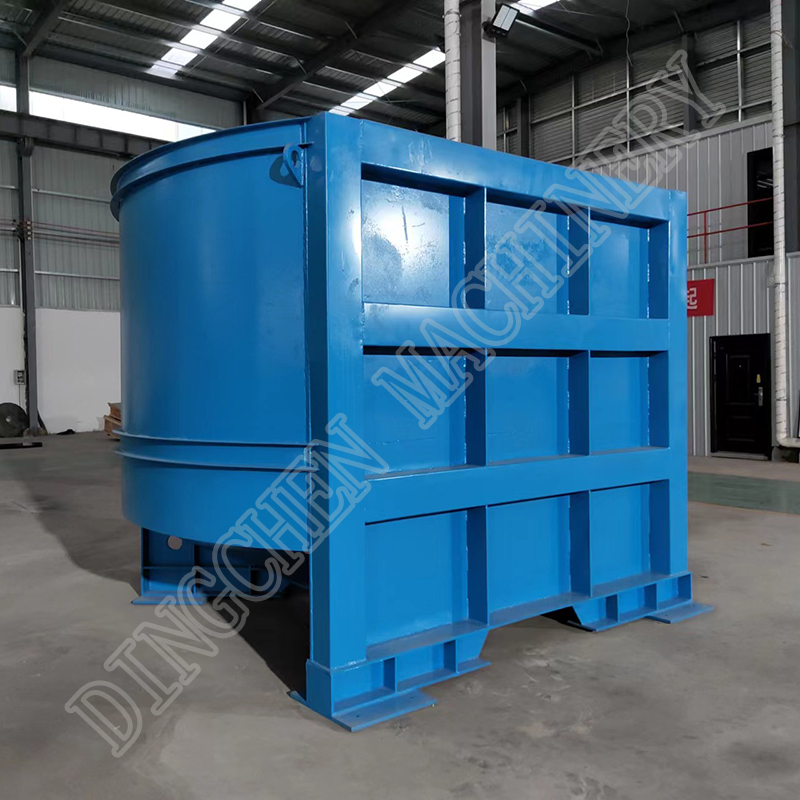
In the pulping process of waste paper recycling and reuse, the hydrapulper is an indispensable core device, undertaking the crushing and defibering of pulp boards, broke paper, and various waste papers. Its performance directly affects the efficiency of subsequent pulping and the quality of pulp. As a key type of waste paper defibering equipment, the hydrapulper has become an important support for the paper industry to realize the recycling of raw materials by virtue of its flexible structural forms and adaptable working modes.
In terms of structural forms, hydrapulpers are mainly divided into horizontal and vertical types. Vertical hydrapulpers have become the mainstream choice for small and medium-sized paper enterprises due to their small floor space, convenient installation and maintenance, and good pulp circulation effect during defibering. Horizontal hydrapulpers are more suitable for large-scale, high-capacity pulping production lines. Their horizontal cavity design can accommodate more raw materials, and the material mixing and shearing efficiency during defibering is higher, making them suitable for processing large pulp boards or batch waste paper. The division of the two structural forms allows hydrapulpers to be flexibly selected and configured according to the production capacity and plant layout of paper enterprises.
According to the pulp concentration during operation, hydrapulpers can be divided into low-consistency and high-consistency types. The pulp concentration of low-consistency hydrapulpers is usually controlled at 3%~5%. The defibering process relies on the high-speed rotation of the impeller to generate hydraulic shearing force, which is suitable for processing easily defibered waste paper raw materials. The pulp concentration of high-consistency hydrapulpers can reach 15%. Defibering is achieved through friction, extrusion between materials under high concentration and strong stirring of the impeller. It can not only reduce water consumption but also effectively retain the fiber length in waste paper while defibering, improving the reuse quality of pulp, and is the preferred equipment for energy-saving pulping processes at present.
From the perspective of working mode, hydrapulpers include continuous and batch types. Continuous hydrapulpers can realize continuous feeding of raw materials and continuous discharging of pulp, which is suitable for highly automated continuous pulping production lines, can greatly improve the overall production efficiency, and meet the continuous production needs of large paper enterprises. Batch hydrapulpers adopt a batch processing mode: raw materials are first put into the equipment cavity for defibering, and then the pulp is discharged at one time. This method is convenient for accurately controlling the defibering quality of each batch of pulp, suitable for small-batch and multi-variety pulp production scenarios, and is widely used in the pulping process of specialty paper.
The multi-dimensional classification of hydrapulpers reflects the continuous optimization of equipment design by the paper industry according to different production needs. Under the industry development trend of green papermaking and resource recycling, hydrapulpers are still upgrading towards high efficiency, energy saving and intelligent control. Whether it is the lightweight improvement of the structure or the parameter optimization of the defibering process, its core goal is always to better adapt to the diversified needs of waste paper pulping and lay a solid equipment foundation for the sustainable development of the paper industry.
Technical Parameter Comparison Table of Different Types of Hydrapulpers
| Classification Dimension | Type | Pulp Concentration | Defibering Principle | Capacity Characteristics | Application Scenarios | Core Advantages |
|---|---|---|---|---|---|---|
| Structural Form | Horizontal Hydrapulper | Low/High Consistency Available | Impeller stirring in horizontal cavity + material collision and friction | Large single-unit capacity, suitable for batch processing | Large paper enterprises, large-scale pulp board/waste paper processing lines | Large processing capacity, high defibering efficiency, suitable for continuous production |
| Vertical Hydrapulper | Low/High Consistency Available | Hydraulic shear force generated by impeller rotation in vertical cavity | Small and medium capacity, high flexibility | Small and medium paper mills, production lines with limited plant space | Small floor space, convenient installation and maintenance, relatively low energy consumption | |
| Pulp Concentration | Low-Consistency Hydrapulper | 3%~5% | Mainly hydraulic shear formed by high-speed impeller rotation | Fast defibering speed, smooth continuous discharge | Processing of easily defibered waste paper and broke, pulping of ordinary cultural paper | Uniform defibering effect, high equipment operation stability |
| High-Consistency Hydrapulper | 15% | Material friction and extrusion + strong impeller stirring | Low unit water consumption, good fiber retention | Energy-saving pulping processes, defibering of specialty paper fiber raw materials | Water and energy saving, low fiber damage, high pulp reuse quality | |
| Working Mode | Continuous Hydrapulper | Low/High Consistency Available | Continuous feeding – defibering – discharging, automatic control | Continuous production, stable capacity | Continuous pulping lines in large paper enterprises, large-scale waste paper processing | High production efficiency, suitable for automated assembly lines, less manual intervention |
| Batch Hydrapulper | Low/High Consistency Available | Batch feeding – closed defibering – batch discharging | Small-batch and multi-variety, controllable quality | Specialty paper pulping, small-batch customized pulp production | Precise control of defibering quality, flexible adjustment of process parameters |
Post time: Dec-23-2025