

In the entire papermaking process of “pulping – papermaking – finishing”, the refiner is a key equipment that determines fiber performance and paper quality. Through physical, chemical, or combined mechanical and chemical actions, it cuts, fibrillates, 帚化 (fibrillation), and refines pulp fibers, enabling originally loose fibers to form stronger bonding force, and ultimately endowing paper with core performance such as strength, uniformity, and ink absorbency. From traditional stone mills to modern intelligent equipment, the technological iteration of refiners has always centered on the three core principles of “high efficiency, precision, and energy conservation”, becoming an important support for the upgrading of the papermaking industry.
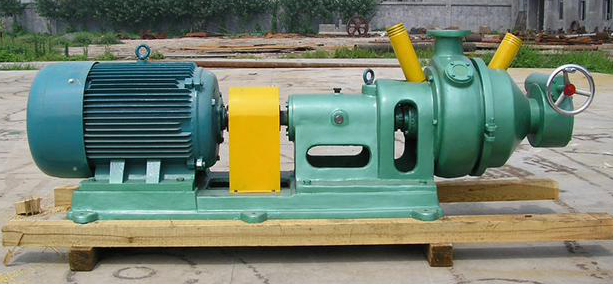
I. Core Functions and Working Principle of Refiners
The core mission of a refiner is to “optimize fiber morphology”, and its working principle can be summarized as “fiber modification under mechanical action”:
- Basic Principle: When pulp passes between the refiner’s discs (or rolls), it is subjected to combined mechanical forces such as shearing, extrusion, and kneading. The fiber cell walls are torn to form microfibrils, and the surface generates a dense fibrillated structure. At the same time, excessively long fibers are appropriately cut, making the fiber length distribution more in line with papermaking requirements.
- Core Functions: Firstly, improve fiber bonding force to make paper have sufficient tensile strength, tear strength, and burst strength; secondly, enhance the uniformity of fiber interweaving to ensure paper evenness and flatness; thirdly, adapt to the needs of different paper types, such as cultural paper requiring fine fibers to improve printability, and packaging paper requiring thick and long fibers to enhance stiffness.
II. Main Types and Technical Characteristics of Refiners
According to structural design, working method, and application scenarios, common refiners in the papermaking industry are mainly divided into the following four categories, each with its own technical focus and scope of application:
1. Disc Refiner
- Structural Characteristics: Composed of a fixed disc (stationary disc) and a rotating disc (rotating disc). The disc surface is distributed with grinding zones of different tooth shapes (such as serrated, trapezoidal, spiral), and the refining intensity is controlled by adjusting the disc gap.
- Technical Advantages: High refining efficiency, uniform fiber modification. It can adapt to various pulps (wood pulp, straw pulp, waste paper pulp) by replacing disc tooth shapes, making it the most widely used refining equipment covering cultural paper, packaging paper, toilet paper, and other paper types.
- Subtypes: Single-disc refiner (acting on one side of the disc), double-disc refiner (acting on both sides of the disc simultaneously), triple-disc refiner (middle stationary disc + two side rotating discs, higher efficiency).
2. Conical Refiner
- Structural Characteristics: Adopts a combination of conical stator and rotor. Pulp spirally advances along the conical gap, subjected to continuous shearing and extrusion. The refining intensity can be precisely controlled by adjusting the conical gap.
- Technical Advantages: Less fiber cutting, good fibrillation effect, suitable for paper types requiring high fiber length retention (such as kraft paper, linerboard). It also has strong operational stability and low energy consumption, commonly used for secondary refining of waste paper pulp or fine processing of high-grade pulp.
3. Cylindrical Refiner
- Structural Characteristics: Composed of a cylindrical grinding roll and an arc-shaped grinding plate. The grinding roll surface is equipped with transverse or spiral grinding teeth. The rotation of the grinding roll drives the pulp flow and completes the refining process.
- Technical Advantages: High tolerance to impurities (such as sand grains, plastic fragments) in pulp, not easy to clog. Suitable for rough grinding of waste paper pulp or pretreatment of coarse fiber raw materials such as straw pulp, often used in the front-end refining process of pulping production lines.
4. High-Consistency Refiner
- Structural Characteristics: Suitable for high-consistency pulp environments (15%-40%). It uses a special feeding device (such as a screw feeder) to ensure uniform pulp entry into the grinding zone. The disc tooth shape is mostly wide-tooth and large-spacing design to enhance fiber kneading effect.
- Technical Advantages: High fiber fibrillation degree, strong bonding force, which can significantly improve paper strength. In high-consistency environments, fiber cutting is less and energy consumption is low. It is suitable for fine refining of high-grade paper types (such as coated paper, specialty paper) or pulp processing requiring high-strength fiber bonding.
III. Key Technical Parameters and Selection Principles of Refiners
1. Core Technical Parameters
- Refining Consistency: Divided into low consistency (≤8%), medium consistency (8%-15%), and high consistency (≥15%). Consistency directly affects refining efficiency and fiber morphology, such as high-consistency refining focusing on fibrillation and low-consistency refining focusing on cutting.
- Disc Gap: A key parameter determining refining intensity. The smaller the gap, the higher the refining intensity. It needs to be dynamically adjusted according to paper type requirements and pulp characteristics (usually controlled at 0.1-1.0mm).
- Disc Tooth Shape and Tooth Width: Tooth shape affects the way fibers are stressed (shear-type tooth shape is suitable for cutting, kneading-type tooth shape is suitable for fibrillation). Tooth width determines the contact area of the grinding zone, which needs to match pulp type and refining target.
- Motor Power and Rotational Speed: Power determines refining capacity (usually 55-1000kW), and rotational speed affects disc linear speed (generally 1500-3000r/min). Higher linear speed means stronger shearing force, suitable for high-intensity refining needs.
- Capacity: Selected according to production line scale. The capacity of a single equipment is usually 5-100t/d, and large-scale production lines can adopt multi-unit series or parallel configuration.
2. Core Selection Principles
- Adapt to Paper Type Requirements: For high-strength packaging paper, priority is given to high-consistency refiners or conical refiners; for fine cultural paper, double-disc refiners or triple-disc refiners can be selected; for waste paper pulp processing, cylindrical refiners or impurity-resistant disc refiners are preferred.
- Match Pulp Characteristics: Wood pulp has long fibers, so focus on fibrillation, and high-consistency refiners or conical refiners are optional; straw pulp has short fibers, so the degree of cutting needs to be controlled, and low-consistency disc refiners are optional; waste paper pulp contains many impurities, so clogging-resistant equipment should be selected.
- Balance Efficiency and Energy Consumption: Combined with production line capacity requirements, select equipment with low unit energy consumption and high refining efficiency. For example, large-scale production lines can use triple-disc refiners, and small and medium-sized production lines can use single-disc refiners or double-disc refiners.
- Consider Intelligent Adaptability: Modern refiners are mostly equipped with PLC control systems, which can realize real-time monitoring of the refining process (such as fiber length, pulp consistency, disc wear status) and automatic closed-loop control. When selecting, it is necessary to combine the intelligence level of the production line and give priority to equipment that can be networked and easy to maintain.
IV. Technological Development Trends of Refiners
With the transformation of the papermaking industry towards “green low-carbon, high-efficiency intelligence, and high-quality”, refiner technology presents three major development directions:
- Intelligent Upgrade: Integrate sensors, the Internet of Things, and AI technology to realize real-time monitoring of the refining process and automatic closed-loop control, improving refining precision and stability.
- Energy-Saving Improvement: Optimize disc structure design (such as bionic tooth shape), adopt high-efficiency motors and frequency conversion speed regulation technology to reduce unit refining energy consumption. Some new-type refiners reduce energy consumption by 15%-30% compared with traditional equipment.
- Multifunctional Integration: Develop integrated “refining – screening – purification” equipment to reduce production processes and equipment floor space; target specialty paper needs, develop special refiners (such as ultra-fine fiber refiners, bio-mechanical pulp special refiners) to expand application scenarios.
As the “core shaper” of papermaking production, the technical level of refiners is directly related to paper quality, production efficiency, and environmental benefits. In the context of the papermaking industry pursuing high-quality development, selecting suitable refiner types, optimizing key technical parameters, and keeping up with the development trends of intelligence and energy conservation will become an important guarantee for enterprises to enhance their core competitiveness.
Post time: Nov-25-2025